
Web Accessibility Audit
Does your website work for everyone who needs to use it?
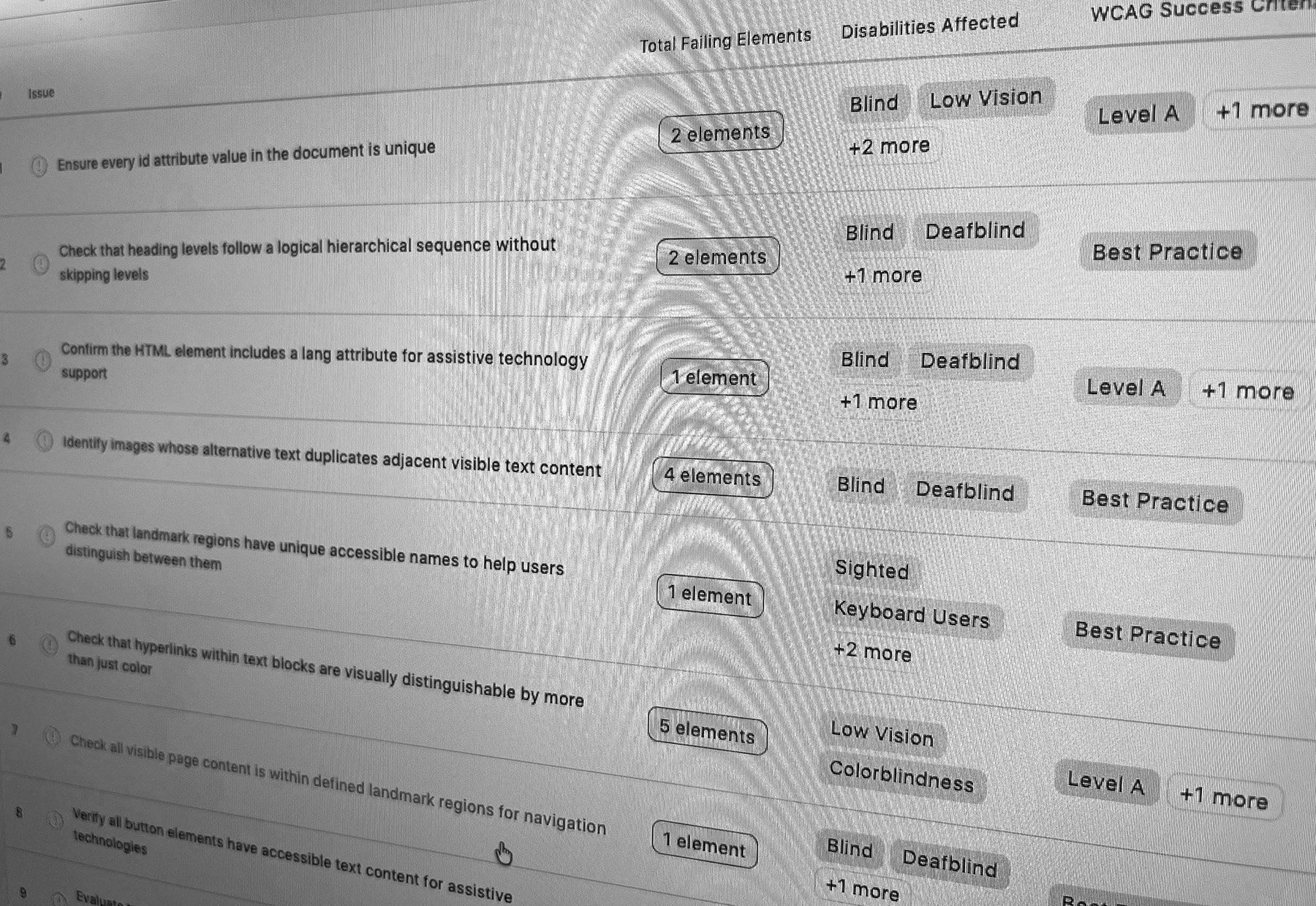
That’s harder to answer than it used to be. Many organizations don’t have a clear picture of how their site is experienced by every visitor. A HALO 22 audit paints that picture so you know where you stand.
Better to Know Than Not
We’ve conducted accessibility audits across nonprofit, government-funded, and commercial websites. What we find consistently is that most sites have issues—and most organizations don’t know about them.
An audit doesn’t commit you to anything. But it does let you make informed decisions so you can decide what to do about it.
Accessibility issues aren’t always visible. Most of them are structural—things your visitors experience, not things you see on the screen.
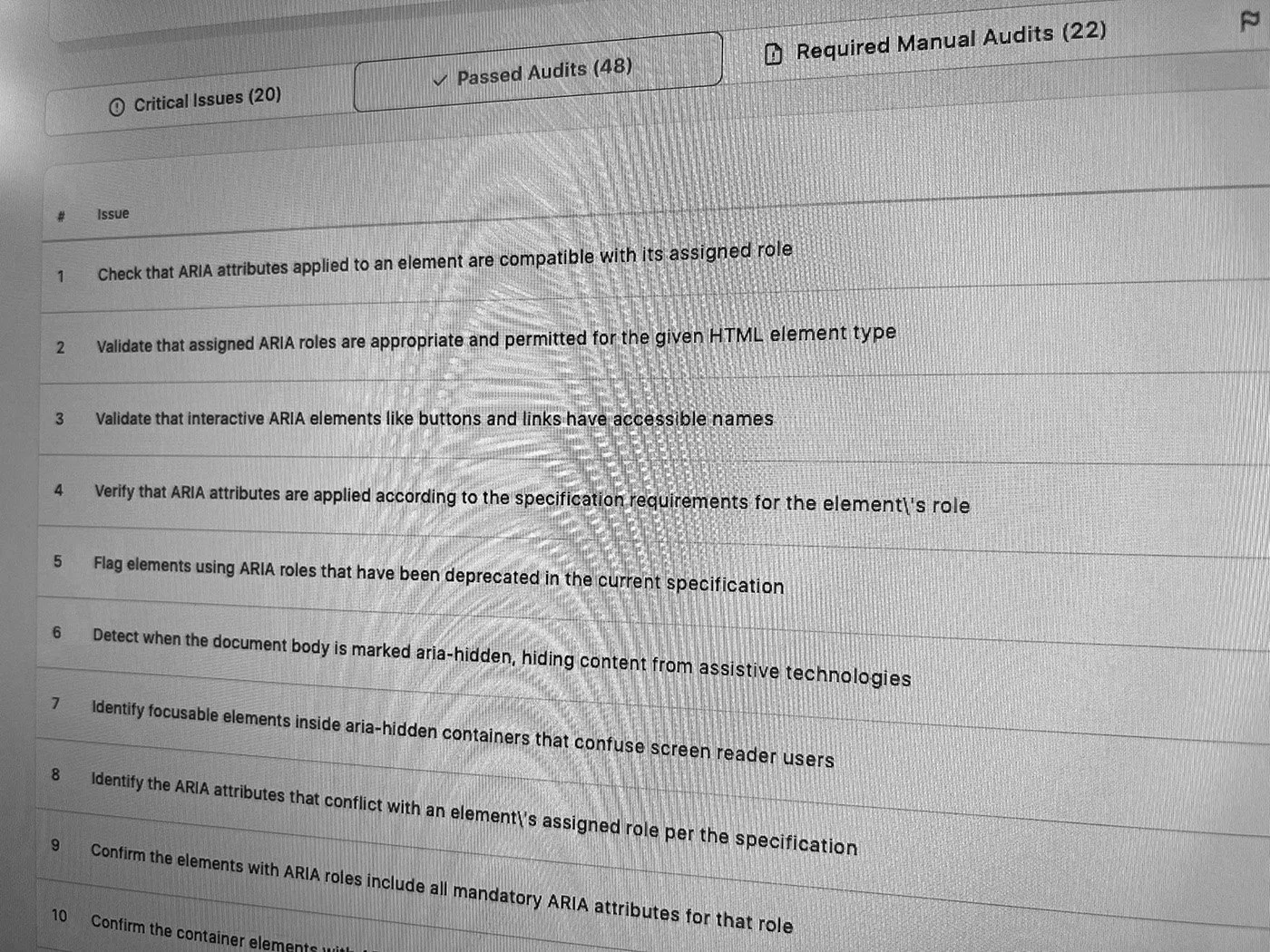
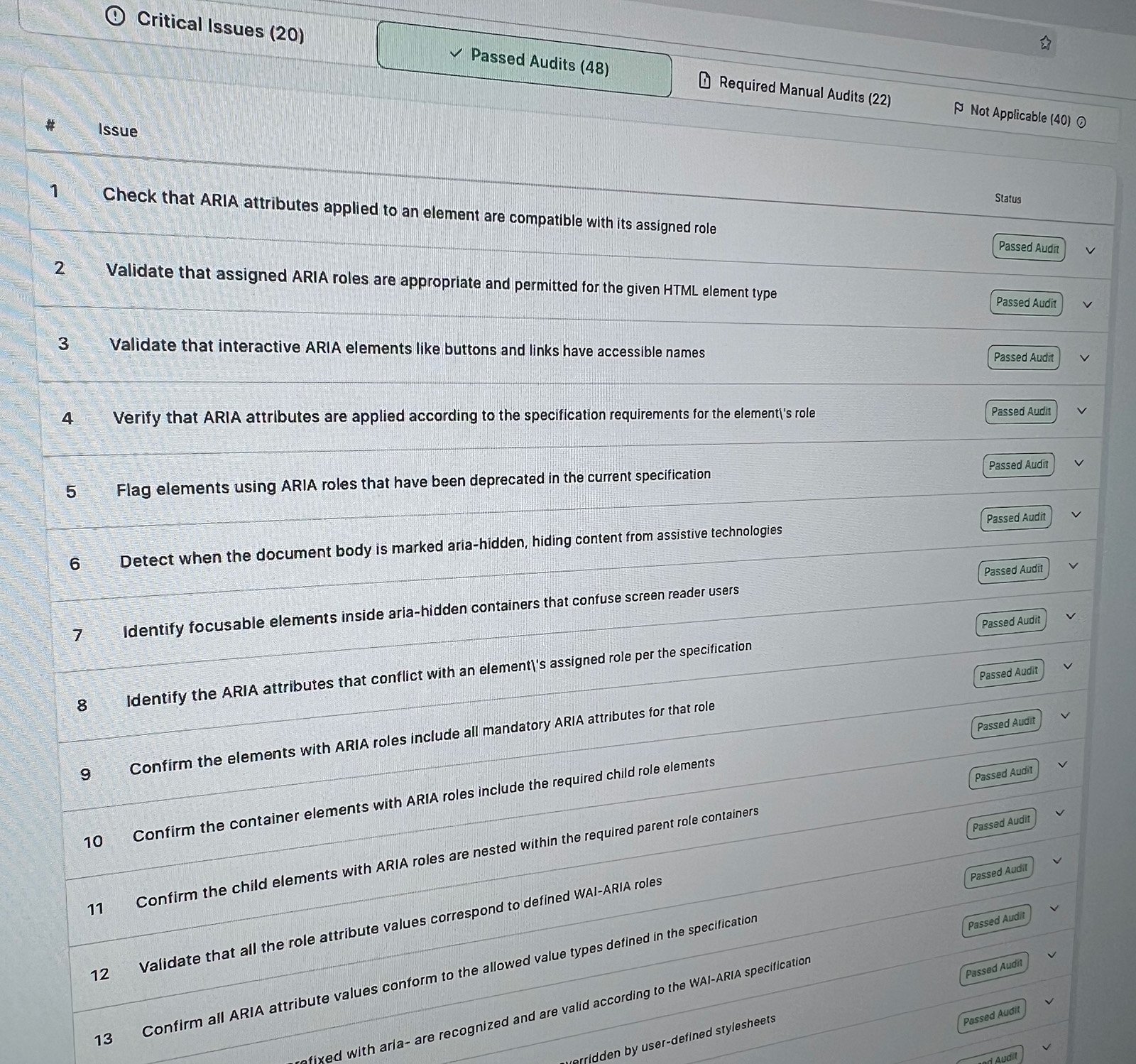
At HALO 22, we audit against WCAG 2.1 Level AA—the current standard referenced in federal accessibility rules. Automated tools catch a portion of issues. Our audits combine automated scanning with manual review, conducted by people with experience across a wide range of websites and organizations. The result is a report that clearly outlines the issues and options for fixing them. And it’s all prioritized by what gets you to compliance most efficiently.
Designed for Everyone/Used by Everyone
Accessibility improvements make websites better for everyone.
Audiobooks started as a library service for low-vision readers. Today they’re a multi-billion dollar industry that commuters, parents, and students rely on every day. Captions were developed for the deaf and hard-of-hearing—now they’re a default expectation on social video. Curb cuts were built for wheelchair users and became indispensable for anyone with a stroller, a dolly, or a rolling suitcase.
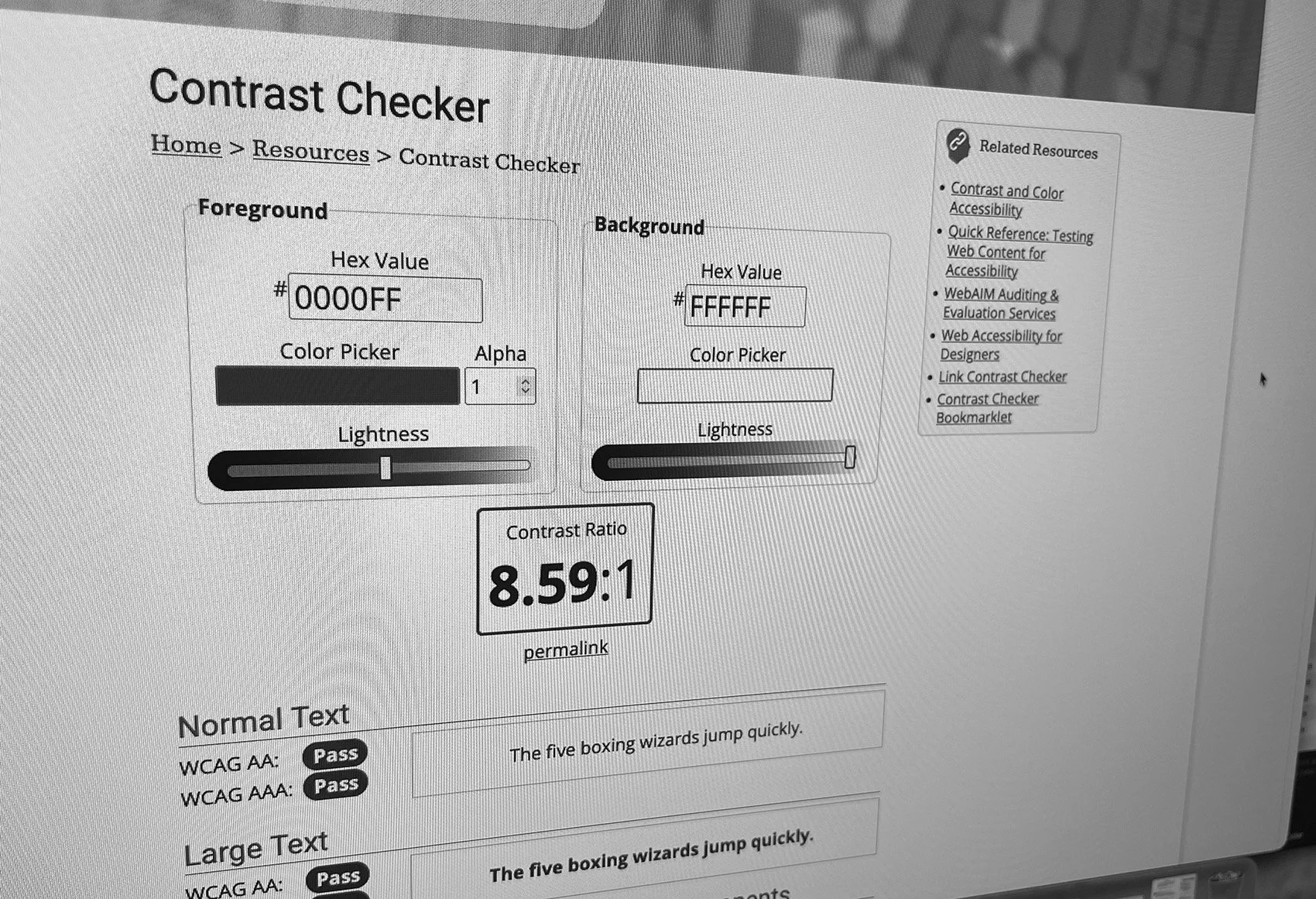
That same idea applies to the web. Proper heading structure, a common accessibility failure, also makes content easier to read and easier for search engines to index. Sufficient color contrast helps low-vision users and anyone reading on a phone in bright light. Logical page structure helps screen reader users navigate and helps every other visitor understand what they’re looking at.
When you address accessibility issues, you’re improving the experience for your entire audience.
The Compliance Rules Have Changed
State and local governments are now required to meet WCAG 2.1 Level AA under a 2024 DOJ rule—with deadlines of April 2027 for larger entities (populations of 50,000 or more) and April 2028 for smaller ones and special districts.
The 2024 rule governs Title II of the ADA—state and local government entities only. Nonprofits and private organizations fall under Title III, which carries no hard federal deadline but a different kind of pressure: Title III litigation around inaccessible websites has been rising steadily for years, and courts consistently apply WCAG 2.1 AA as the benchmark when cases come up.
The rules are moving. But accessibility requirements don’t need a mandate to be worth addressing. If your site isn’t accessible, some of your visitors can’t use it. Isn’t that worth addressing regardless of where the regulatory lines fall?
What You Get
Audit: Starting at $750
A complete accessibility review of your website, including:
Automated scan across all pages.
Manual spot-check of key page types and user flows.
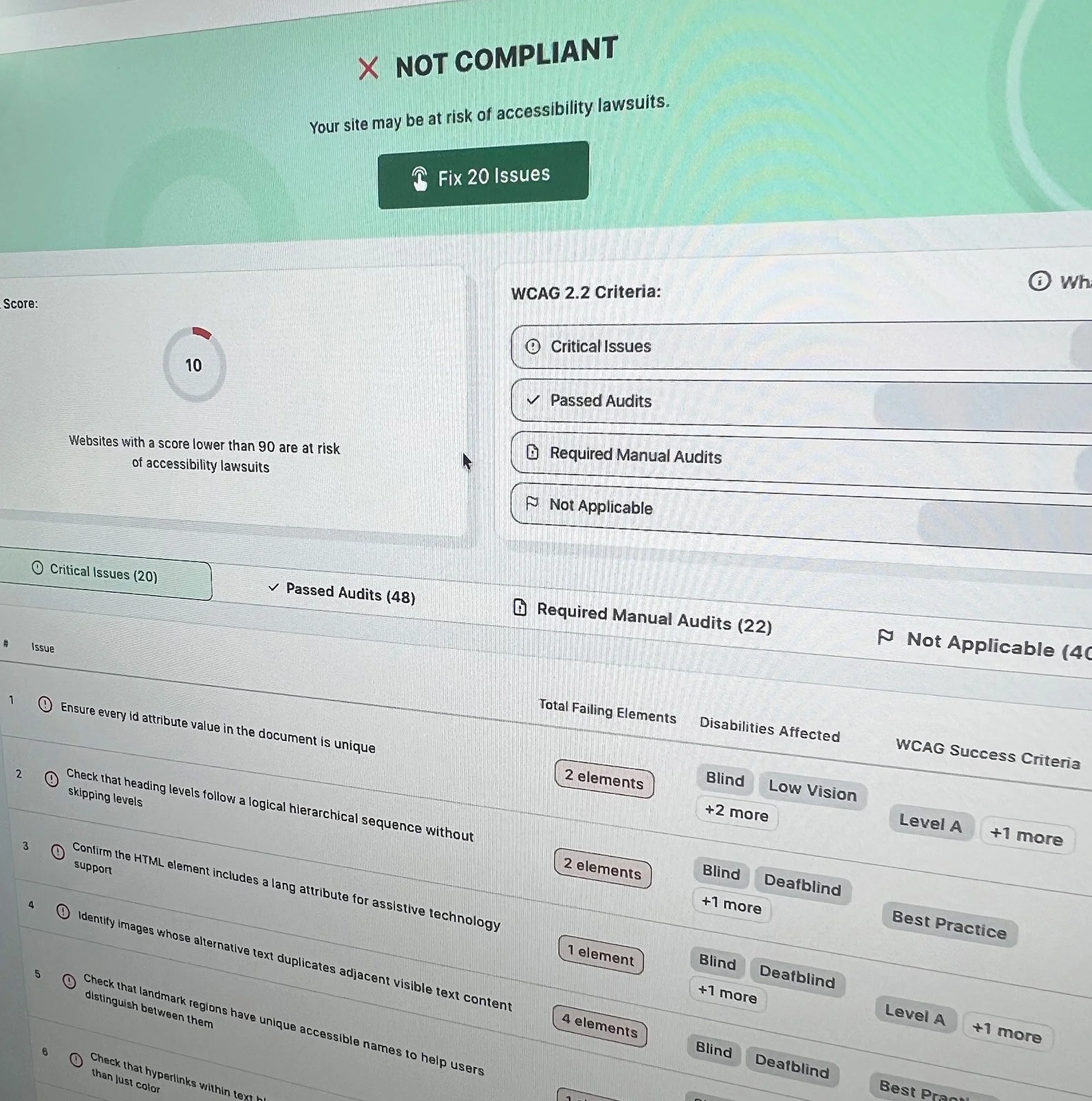
Findings report with every issue identified, categorized by severity, and mapped to the specific WCAG criterion it fails.
An Accessibility Impact score for the site overall.
Plain-language summary written for non-technical stakeholders.
What Happens Next
An audit is a standalone engagement. If you want help understanding what the findings mean in practice, or want to talk through next steps, we’re glad to do that.
Ready to find out where your site stands?